I. Introduction:
- For this post, we will be discussing possible optimization approaches for Gzip. For more context, please visit building and profiling posts
- To understand the code more thoroughly, we will need to have a look at the source code that consists of longest_match function. The code is located at deflate.c in the gzip project
II. Getting started:
1. Understand the code:
- After viewing the implementation of the function, I realize that aside from some checking process to make sure the values are not compromised, this function spent most of it’s time in a do – while loop
- As for the checking flags, I noticed there are a flag constantly appears on in the function: UNALIGNED_OK. According to the comment written by the developer, this flag can help to speed up the program speed
2. Possible approaches:
- As mentioned in the building post, I will be taking the following 2 optimization approaches:
- Enable DUNALIGNED_OK debug flag
- Find alternative to byte by byte comparison
- Find alternative for data structure to simplify assembly code
III. Optimization:
1. DUNALIGNED_OK:
- Fortunately, it appears that this is the easiest way to optimize this program
- To test this, I have ran the program before and after the flag enabled to compare the efficiency of this flag
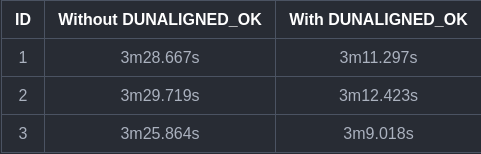
- As can be seen from the table above, the program showed a slight improvement in term of running time
- Although it showed an increase in execution time, the developers of this project noted that this flag isn’t always reliable so it must be tested on your platform before being used
2. Byte by byte alternative:
- As for the comparison statement that takes the most time in the loop, I misunderstood the structure the comparison statement
- It seems like there isn’t a whole string to perform comparison, the entire comparison were surrounding a byte or a short only so there is not reason to find the alternative to this as it will slow down the program even more
- So the next step is to change the data structure to simplify the assembly code but as I look into the header file gzip.h, the data structure used in this function is unsigned char and unsigned short which is the smallest and most efficient data type can be used
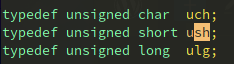
- On top of that, in the declaration inside longest_match, the variables were created using the register keyword which means the data is stored in the register for faster access so I believe that there is nothing more to optimize for this portion of the code
IV. Result:
- Although being called the most among all the function, I believe there is nothing more to be done for longest_match function
- If we were to optimize this program, it would be wiser to target other functions that also being called more than usual
- As analyzed above, longest_match function uses the most efficient data structure and even the register keyword for extra speed
 SPO600